
The more we understand about neurobiology and social psychology, the more we understand that humans are wired to connect.
Turns out Professor Maslow didn’t have it quite right when he designed his famous five-tiered hierarchy of needs (Fig 1), assuming that our physiological needs were more important to our survival than affection and love. The latest neuroscience out of UCLA tells us that the drive for connection is as essential to our wellbeing as our ‘basic’ needs of food, water and shelter.

Maslow’s hierarchy of needs, Fig 1
Aristotle’s two thousand year old assertion, “Man is by nature a social animal,’ is true, and only the tip of the iceberg. Over the past decade or so we have come to understand just how critical our social interactions are to our well-being. People with larger social groups are healthier, live longer and claim to have happier lives.
Well, that might help explain why I am feeling a bit out of sorts these days, how about you?
And if ‘out of sorts’ doesn’t quite describe what you are feeling, you are not alone. Researchers estimate that about 28% of us in the United States are acutely and painfully lonely, and estimates in the U.K. are closing in on 50%. Back in 2016, even before today’s “stay in place’ edicts, the U.S. Surgeon General Vivek Murthy warned that Americans are “facing an epidemic of loneliness and isolation.”
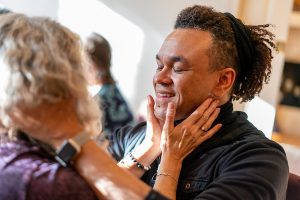
Being lonely increases the risk of heart attacks, dementia, and depression. The effect is so strong that it is considered as unhealthy as smoking. And this is all before you throw in the requirement for “social distancing” as the world heals from the Covid-19 virus. While we all can take solace in the fact that staying home is helping curb a global pandemic, a very deep part of us is experiencing a kind of withdrawal. And it hurts. It turns out that our brains are literally designed for connection and react to various kinds of social pain in much the same way we react to physical pain. For me it feels like heart ache…a deep yearning to be with the people I love.
The good news is that we can engage with the part of the brain that is called, funny enough, ‘the social brain’ and change our perception of our situation – counteracting the negative effects of physical isolation. These are some suggestions for changing our point of view and lessening our social heartache. I collected these recommendations while doing the research for this article – and I have tried them all. They work.
Create Connection In the Midst of Separation
- Acknowledge and appreciate your social network. No matter how big your social circle actually is, if you perceive it to be small, you’ll experience the detrimental effects of loneliness. So take a moment to notice how many people you actually have in your life that you love. Everyone once in a while, I will make a list of all the people in my life that I care about, and I am almost always surprised at how long the list is. Take a moment to feel into your appreciation for each one of these people.
- Use digital technology and social media intentionally to deepen your authentic connections rather than as a place to tune-out or distract yourself. Start by sending a message to someone you haven’t reached out to in awhile and let them know you were thinking of them.
- Do good for others (the positive brain activity in people who volunteered their time to a cause they believed in was similar to receiving a huge pay raise).
- At least once a day, especially if you live alone, reach out to a friend or family member by phone or video chat. (I am considering this one as a new life long habit.)
- Write a letter. We’ve found that taking 10-15 minutes to intentionally put your thoughts and feelings into words on paper elicits deeper reflection and connection with others – even if you never send the letter!
Loneliness is part of the human condition. But it doesn’t have to dominate your shelter-in-place experience. Reach out to friends and loved ones. Cherish and appreciate the people you have in your life, even when you can’t be together. Take the time to nurture your connections, and meet one of your most basic needs.
****
About the author: Susan Chettle Rutherford has served on the HAI workshop team since 2009. She is also a writer and Certified Professional Co-Active Coach. Susan is absolutely passionate about helping people manifest lives of joy, love, abundance and fulfillment. Since she can remember, Susan has been committed to personal growth, and her biggest joy is being a facilitator of transformation in others. These days Susan is also on the Marketing team for HAI Global, helping them spread their message of love around the world.
About the editor: Kate Gillispie is the Marketing Director for HAI Global and co-host of May I Have This Dance, a podcast about love, intimacy, and sexuality. Find the podcast by searching for ‘May I Have This Dance‘ on iTunes, Google Podcasts, or wherever else you find your podcasts. You can also join our active community on Facebook.